Nantong Kesi
Introduction
Sericulture and silk weaving represent an ancient and intricate craft integral to Chinese culture, with its roots deeply embedded in historical developments. One of the most notable forms of this craft is Nantong kesi, which has a storied history dating back to the Northern Song Dynasty (960-1127). The art form encapsulates the meticulous and skilled process of weaving silk into tapestries, characterized by unique aesthetic and cultural significance.
Historical Background of Nantong Kesi
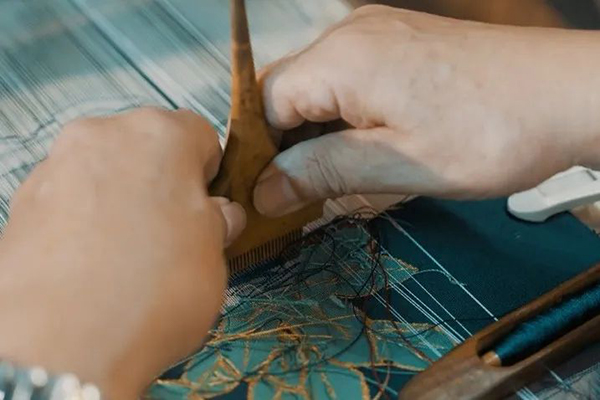
Nantong kesi is a variant of the traditional Chinese tapestry weaving technique known as Ben kesi. Originating in the Northern Song Dynasty, the craft utilizes relatively thick silk threads that create a distinctive spiral pattern on the surface of the fabric. This technique involves a multitude of intricate steps, beginning with sketching the design and applying colors, followed by matching the threads, annotating techniques, preparing the shuttle, weaving the warp, and finally trimming the threads to produce the final work. The creation of a Nantong kesi piece demands the weaver's full coordination of hands, feet, eyes, and mind, leading to a harmonious and skillful execution of the design.
Evolution and Challenges
Throughout its history, Nantong kesi has faced significant challenges and transformations. During the Ming Dynasty (1368-1644), the emergence of Ming kesi, another tapestry technique, gradually overshadowed the prominence of Nantong kesi. The early 20th century saw a resurgence of interest in Nantong kesi, mainly due to the efforts of Zhang Jian, a key figure in Nantong who established a women's vocational school and enlisted skilled artisans to revive the craft. Despite these efforts, wartime destruction led to a decline in the industry and a loss of the kesi weaving skills.
Revival and Preservation Efforts
The revitalization of Nantong kesi began in 1979, spearheaded by Wang Yuxiang, now a representative inheritor of the craft. His dedication to researching and reintroducing Nantong kesi has sparked a renewed interest in this traditional art form. Wang established the Xuanhe kesi studio, focusing on the promotion and education of Nantong kesi techniques. His children have also been actively involved in preserving and advancing the art since 1996, contributing to its continuous renaissance. Wang has expressed a desire for broader appreciation and understanding of kesi, striving to ensure its legacy and cultural value are recognized widely.
Cultural Recognition
In recognition of its cultural significance and rich heritage, Nantong kesi was inscribed in the UNESCO Representative List of the Intangible Cultural Heritage of Humanity in 2009. Further affirming its importance, Nantong kesi was acknowledged as an intangible cultural heritage of Jiangsu province in January 2016. These accolades underscore the art form's enduring legacy and significance within the broader context of Chinese sericulture and silk weaving traditions.








